If you menstruate, you're probably all too familiar with some of the discomfort and symptoms that can come with it. From cramps and bloating to fatigue and mood swings, these symptoms can make it difficult to focus on daily tasks, let alone maintain a consistent exercise routine.
But what if there was a way to alleviate these symptoms and help you feel good throughout your cycle?
Cycle syncing, also known as menstrual cycle syncing, is a method that aligns your exercise, nutrition, and overall lifestyle to the natural rhythm of your menstrual cycle, which can help to reduce symptoms, optimize performance, and improve overall well-being.
In this article, we will share everything you need to know to:
Get started with cycle syncing
How to alleviate common symptoms
Tips on how to implement it into your routine for a healthier and more balanced life
If you'd like a Cycle Syncing Plan sent directly to your inbox at the start of each phase of your cycle, complete this form: Cycle Syncing Plan
What is cycle syncing?
Cycle syncing, also known as menstrual cycle syncing, was first coined by Alice Vitti, an expert in women's hormones and integrative nutrition, in her book “Woman Code” in 2014.
In simple terms, cycle syncing involves aligning your lifestyle, specifically diet, exercise, sleep patterns, social commitments, and more, based on the different phases of your menstrual cycle to improve hormone balance and alleviate symptoms that are commonly associated with hormone fluctuations.
This approach can help optimize your health and fitness goals by taking into account the unique hormonal changes that occur during each phase of your menstrual cycle.
Understanding the importance of cycle syncing for the menstrual cycle
The menstrual cycle is often mistaken for menstruation (period). However, your period is just the first part of your cycle, which starts on the day you start bleeding and ends when your next period starts.
Understanding the menstrual cycle and how it impacts your body and mind can help you understand changes in your hair, skin, bowel movements, mental health, physical strength, sex drive, and so on.
Phase 1: Early Follicular Phase (also known as Menstruation or Period)
The Early Follicular Phase, also known as the Menstrual Phase, is the first phase of your menstrual cycle which usually lasts between 3 to 7 days, and is characterized by the shedding of the lining of the uterus (also known as the endometrium).
During this phase, your estrogen and progesterone levels are low. Common symptoms you may experience during this time are cramps, fatigue, mood swings, and back pain. However, these might be different for you.
What menstrual symptoms do YOU commonly experience?
Phase 2: Late Follicular phase
The late follicular phase is the second phase of your menstrual cycle which can last from 14 to 21 days and is characterized by the growth of new follicles in the ovaries.
During this phase, your estrogen levels gradually increase, which can improve your mood and energy levels.
Phase 3: Ovulation and Mid-Luteal Phase
The ovulatory phase is the third phase of your menstrual cycle which typically lasts for about 1 to 2 days, and is characterized by the release of an egg from the ovaries (also known as ovulation).
During this phase, your estrogen and progesterone levels are at their highest, which can boost your mood, energy levels, and libido.
Phase 4: Late Luteal phase
The Late Luteal phase is the final phase of your menstrual cycle and generally commences on day 21 and ends on day 28 on a standard 28-day cycle. During this phase, your progesterone levels increase, which can cause symptoms such as bloating, breast tenderness, and mood changes, also known as PMS.
What PMS symptoms do YOU commonly experience?
Each phase is characterized by specific hormonal changes that can affect your mental health and physical health. Now that we know the key hormonal changes, we can discuss more how to adapt your nutrition and fitness routine to support your physical and mental health and maximize its benefits
According to experts, cycle syncing can offer several benefits for women, including:
Improve hormonal balance
Reduce PMS symptoms such as bloating, mood swings, and cravings
Make your workout routine more effective
Reduce the risk of injury during a workout
Reduce period symptoms such as period pain and mood swings
Feel more energized and balanced
Provide fertility support and when best to conceive
Better quality of sleep
Who can benefit the most from cycle syncing?
It’s important to note that every person is different and some will experience severe symptoms throughout their cycle whilst others will not be greatly impacted.
Understanding cycle syncing can benefit every person who menstruates, especially if you do not feel at your best in all phases of your cycle (i.e. suffer from PMS).
That being said, based on a study done in 2016 on a group of women aged from 25 to 46, you may benefit the most from cycle syncing if you are:
Overweight
Over fatigued
Constant low libido
Finding it hard to conceive
How long does it take to feel the effects of cycle syncing?
Since we all have different cycle patterns, it is hard to pinpoint the exact timeframe, that being said, on average, it can take up to 3 months for you to start feeling the effects of cycle syncing.
How to cycle sync during each phase of the menstrual cycle?
In a previous section, we explained the different hormonal fluctuations that you would face during each phase of the menstrual cycle. In this section, we shall discuss how you can utilize those fluctuations and tailor them to your fitness routine, nutrition plan, and fertility to make the best of it.
How to cycle sync during the Early Follicular (Menstrual) Phase
During the menstrual phase, your energy levels are likely to be at their lowest, due to your estrogen and progesterone levels being low, and the potential loss of nutrients from bleeding. This can lead to feelings of fatigue and bloating.
Exercise cycle syncing guidelines during the menstrual phase
As you are low on energy levels, this is not your moment to do high-intensity workouts. It is best recommended to take a rest during this phase.
As for workouts, try low-impact exercises during your menstrual phase like:
Relaxing yoga poses
Light cardio, like walking and hiking
Stretching
Note these are general guidelines. Some people report feeling strong and energized from day 2 of their cycle. If so, listen to your body and amend your workouts to fit your needs.
Nutrition cycle syncing guidelines during the menstrual phase
Food focus: Nutrients, warmth & comfort
To support your health and well-being during this phase, focus on eating foods that are high in fiber, iron, zinc, and antioxidants. These foods can help alleviate bloating and support overall health.
Add these food items to your shopping list for the menstrual phase:
Sweet potato
Kelp or similar sea vegetables
Brown rice Kefir or probiotic yogurts
Pumpkin seeds
Millet-based cereals
Wheat germ
Protein such as beef/chicken
Lentils
Fish
Eggs
Tofu
Nuts
Mental wellness cycle syncing guidelines during the menstrual phase
As this phase puts you in a low-energy state, it is important to spend a little time for yourself and explore your inner self.
Practice a few of these for a better state of mind during your menstrual phase:
Meditation
Journaling
Breathing exercises
How to cycle sync during your follicular phase
During this phase, your estrogen levels gradually increase, which can improve your mood and energy levels. Symptoms like cramping that occur during the menstrual phase often do not occur in the follicular phase.
Exercise cycle syncing guidelines during the late follicular phase
Now that your energy levels are starting to kick back in, this is a good time to ramp up your workouts and try more challenging activities. Some of the workouts you can include during your follicular phase are:
HIIT (high-intensity interval training)
Boxing
Strength training
Swimming
Running
Hiking
Nutrition cycle syncing guidelines during the late follicular phase
Food focus: Fresh, light, and repair
During the late follicular phase, focus on eating protein-rich foods, which can help support muscle growth and repair. It is also important to include adequate fiber during this stage to support the body’s metabolism of estrogen.
Add these food items to your shopping list for the follicular phase:
Leafy green vegetables
Flaxseeds and pumpkin seeds
Avocado
Broccoli
Nuts/seed mix
Probiotic yogurt
Olive oil
Zucchini
Fish (Salmon)
Mental wellness tips during the late follicular phase
During this phase, you are likely to feel more creative, upbeat, and optimistic. Utilize this time to do activities like:
Brainstorming and planning
Try new things
Socializing
How to cycle sync during ovulation and the mid-luteal
During this phase, your estrogen and progesterone levels are at their highest, which can boost your mood, energy levels, and libido, however, as the phase progresses and hormones start dipping energy levels will start decreasing.
Ovulation is at the start of the mid-luteal phase and your body is getting ready for a potential pregnancy.
Ovulation and the mid-luteal phase workouts
This is a great time to focus on taking advantage of your increased energy levels. Keep in mind, not to overdo your training, as it could decrease your sex hormone-binding globulin (SHBG) resulting in lower fertility.
Some of the workouts you can include during your ovulation phase are:
HIIT (high-intensity interval training)
Cycling
Running
Circuit training
Boxing
Foods to eat during ovulation and the mid-luteal phase
Focus on eating a balanced diet that includes a variety of fruits, vegetables, and healthy fats, which can support overall health and well-being.
Food focus: Fibrous, strength, and recovery
Add these food items to your shopping list for the ovulation phase:
Quinoa
Eggs
Kale
Tomatoes
Flaxseeds & pumpkin seeds
Fruits: Berries, citrus fruits, papaya
Leafy green vegetables
Wholegrain: bread, pasta, rice
Ovulation phase mindset
The ovulation phase is the peak moment of your mindset. You will feel more confident and magnetic. Completely utilize this moment to indulge in:
Socializing
Public speaking
Planning and prepping
Collaborations
How to cycle sync during your late luteal phase
During this phase, your progesterone levels increase, which can cause symptoms such as bloating, breast tenderness, and mood changes.
If your egg hasn’t been fertilized during your cycle, this phase is where your body gets ready for menstruation. Your progesterone peaks, but then drops shortly. Estrogen also drops hard. This stage can be when premenstrual syndrome or PMS may occur.
Cycle syncing Late Luteal phase workout recommendation
During this final phase of your cycle, you are likely to still have a little bit of energy reserve left, but it will drop shortly after. It is a good idea to start pulling back a little bit and start prepping for the menstrual phase in terms of workouts
Some of the workouts you can include during your luteal phase are:
Yoga
Strength training (light)
Pilates
Low-intensity cardio
Cycle syncing nutrition recommendations
Focus on eating foods that are high in complex carbohydrates, which can help regulate your mood and energy levels. During the luteal phase, you are likely to experience heavy cravings and mood changes. So it is key to provide your body with the nutrients it needs, but not the wrong ones.
Late luteal food focus: limit cravings, health, and mindfulness.
Add these food items to your shopping list for the luteal phase:
Lentils
Dark chocolate
Caffeine-free herbal teas
Sesame seeds
Spinach
Brown rice
Protein(tofu, chicken, lean meats, fish)
Berries
Fruits (Apple)
Cycle syncing late luteal phase mental health recommendations
During the late luteal phase, you might be feeling more fatigued and less sociable. Your mind is also more prone to experiencing anxiety and overthinking due to the increase in progesterone and drop in estrogen.
This is the best moment to indulge in:
Planning
Project preparations
Self-analyzing
Prioritize sleep
Fitness and cycle syncing
As discussed in the previous section, it is best to cater your workout to the different phases that your cycle will take you through.
For ease, here is a hormonal workout plan for you to save to plan your workout calendar
Nutrition and cycle syncing
Nutrition during cycle syncing depends on your hormonal requirements at each of your phases as we discussed.
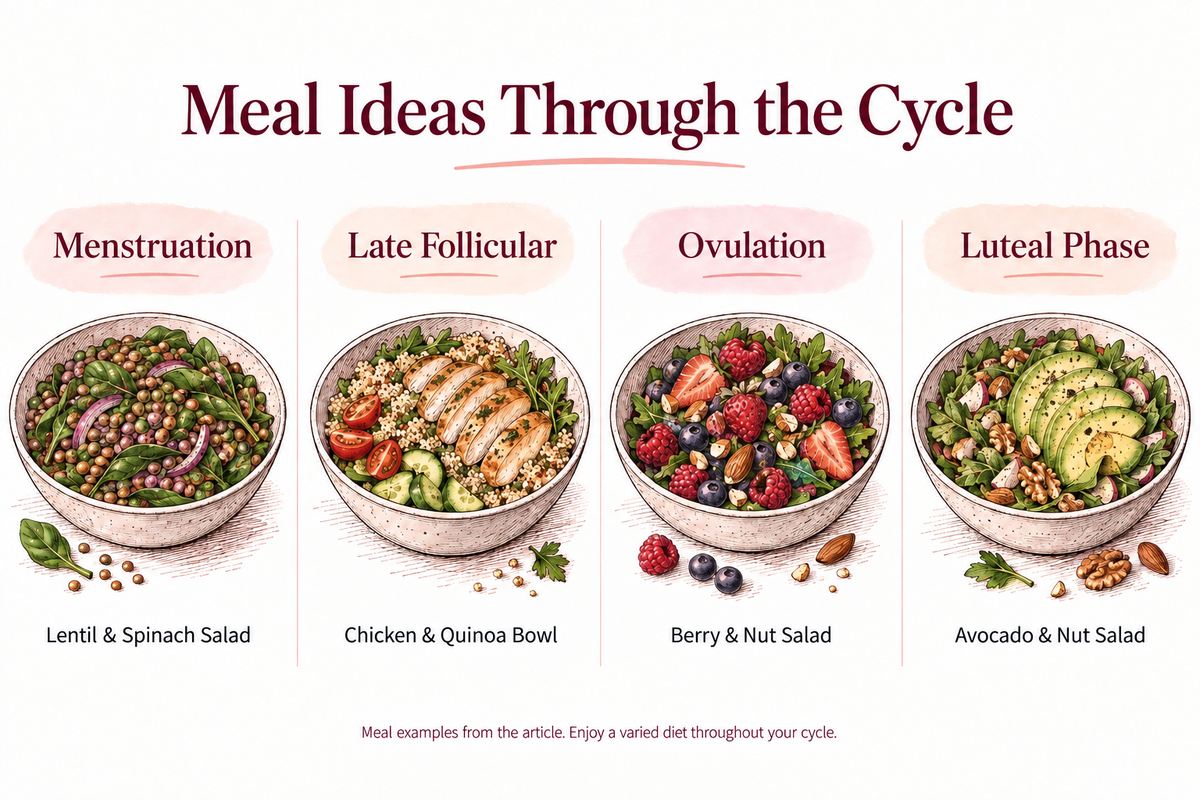
Here is a cycle-syncing food chart for you to save to plan your nutrition calendar and shopping list.
Illustrative meal ideas across the cycle. Enjoy a varied diet throughout your cycle. · Elara Care · AI-assisted illustration
Sex and fertility and cycle syncing
As hormone levels heighten and lower, so does your libido. Your sex drive peaks the most when you are in your ovulation phase, syncing with your body when it's most fertile. The menstrual phase is the least fertile phase of the month.
Can cycle syncing help with weight loss?
Cycle syncing workouts are designed to give the best output based on the phase of the menstrual cycle that a woman is in at the moment. By using this method of exercise, cycle syncing can help with weight loss, hormone balance, better sleep, sex drive, and so much more.
How to start cycle syncing?
To start cycle syncing, the first step is to track your period and identify which phase you are currently in. If you are facing irregular patterns, it would be wise to also note down your energy and mood levels.
Once you have identified your phase in the menstrual cycle, set guidelines of how to eat and exercise to support your body during these phases best.
You can also use your body's natural cues to identify when your phase changes.
Does cycle syncing work?
The simple answer is cycle syncing done correctly can be very effective because it allows you to create a plan that works with your natural rhythms. For example, it's been shown to work better for losing weight than typical weight loss programs, because it takes into consideration your cravings at specific stages of your cycle.
So, why are most women still not following this emerging trend? Why do some women tend to give up on cycle syncing mid-way through?
“Sticking on to this procedure of cycle syncing is easier said than done” A study in 2004 showed that about 46% of women have a fluctuating pattern in their cycle length by about 7 days. A further 20% of them had a fluctuation of about 14 days. This simply means your cycle would differ from another woman, therefore generally following a few steps would just not be enough to see the same results as another would see.
It is therefore important to track your cycle with a good period tracking app and to follow tailored suggestions and procedures supporting your body and cycle, especially if you feel like you haven't been able to experience many differences even after following all the steps in this article.
Founder of Elara Care and O.A. Dip. Certified Women's Health Practitioner, Jas is working to create better solutions for women since 2018, sharing her struggles and experiences with female health