The follicular phase of your cycle starts on the first day of menstruation and ends with ovulation. This phase is characterized by a gradual increase in estrogen levels, which has a myriad of effects on the body including impacting energy levels, mood, and overall hormonal balance The change in hormones during this time can affect your energy levels, strength, and mental focus. Nutrition can significantly impact hormonal balance, reproductive health, and our overall well-being. So choosing the right foods can help live a healthier and fuller life.
In this post, we share what to eat during the follicular phase to give your body what it needs to perform at its best.
Nutritional Goals for The Follicular Phase:
Hormonal Balance: Diet can support hormonal balance to ensure a smooth transition to the next phase of the menstrual cycle.
Energy Levels: The body’s energy levels tend to fluctuate with hormonal changes; thus, maintaining a balanced diet is crucial. Incorporate whole grains for sustained energy.
Digestive Health: Fermented foods like kimchi and sauerkraut, which are high in probiotics, as well as fiber-rich foods like squash, green peas, and sweet potatoes can promote better digestion and nutrient absorption
Increase the amount of iron, zinc & vitamin D in your diet
Iron helps produce red blood cells and transports oxygen throughout the body. Blood loss during menstruation can reduce the amount of iron in the body, resulting in low energy and fatigue. Eating more iron-rich foods during this stage can help compensate for this deficiency.
Recommended Foods for The Follicular Phase:
Fresh Vegetables and Fruits
Include a variety of colorful vegetables and fruits in your diet to benefit from the different nutrients they offer.
Notable vegetables: Consuming a variety of fresh vegetables such as artichokes, broccoli, carrots, parsley, green peas, string beans, and zucchini can be beneficial as they support the metabolization of estrogen.
Notable fruits: Berries, citrus fruits, and apples are rich in antioxidants and vitamins that can support hormonal balance and overall health.
Lean Proteins
Opt for lean cuts of meat, poultry, fish, and plant-based proteins like legumes and tofu. These proteins are essential for muscle repair, growth, and maintaining a balanced blood sugar level.
Whole Grains
Your body is more receptive to activities like strength training, so it’s a great time to focus on fitness and eat foods that support muscle growth and recovery. Consume carbs (ideally complex carbs) alongside your protein source to support your more active lifestyle and increase energy levels.
Whole grains like quinoa, brown rice, and whole wheat provide sustained energy due to their complex carbohydrate content. They also provide essential B vitamins and minerals that support various bodily functions.
Healthy Fats
Avocados, nuts, seeds, and olive oil are excellent sources of healthy fats. These fats are essential for hormonal balance and can also provide sustained energy.
Sprouted and Fermented Foods
Incorporate sprouted grains and seeds for better nutrient absorption as the sprouting process breaks down antinutrients that can interfere with mineral absorption.
Fermented foods like kimchi, sauerkraut, and kefir are rich in probiotics which can promote better digestion and support a healthy gut microbiome.
Additional Recommendations
Hydration is key, so ensure you're drinking plenty of water throughout the day.
Continue to ensure you get enough iron and vitamin C to replenish levels that may have been depleted during your period.
Tailoring Your Diet to Your Body’s Needs
Every woman's body is unique, and while the general recommendations provided are grounded in extensive research and expert advice, it's imperative to recognize that individual needs may vary. The follicular phase, like other phases of the menstrual cycle, presents an opportunity to tune into your body's signals and tailor your dietary choices accordingly.
Listen to Your Body: Paying attention to how different foods make you feel can provide invaluable insights. For instance, if certain foods cause bloating or discomfort, it might be worth exploring alternative options. Additionally, tracking your energy levels, mood, and any other symptoms about your dietary choices can help you make more informed decisions that align with your body’s needs.
Customize Your Diet: You might find that certain recommended foods work wonders for you, while others don’t have the desired effect. It's about finding what nourishes your body and supports your wellbeing during the follicular phase.
Experimenting with different foods while keeping the nutritional goals of the follicular phase in mind can be a practical approach to customizing your diet.
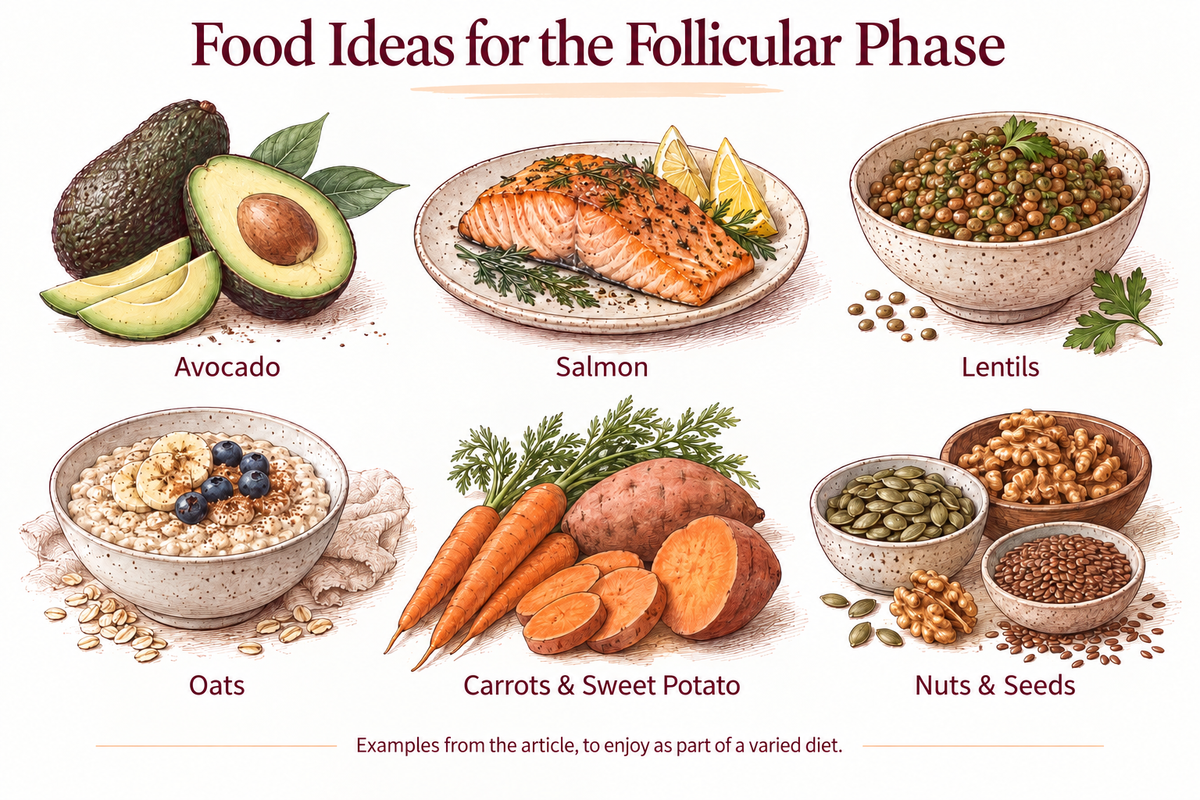
Add these food items to your diet
Avocado
Wild Salmon
Sesame
Sunflower Seeds
Red Meat
Carrots
Sweet Potato
Lentils
Brown/Wild rice
Oats
Walnuts
Flaxseeds
Pumpkin Seeds
Milk Thistle Tea
Food examples from the article, to enjoy as part of a varied diet. · Elara Care · AI-assisted illustration
Discover how different foods can support your overall health and reduce menstrual cycle-related symptoms associated with the different phases of your cycle: Menstrual Cycle Food Chart.
This article has been reviewed by Head Nutritionist Stephanie Baker.
Founder of Elara Care and O.A. Dip. Certified Women's Health Practitioner, Jas is working to create better solutions for women since 2018, sharing her struggles and experiences with female health
I'm Steph and I'm a BANT registered nutritionist. My field of expertise is women's health, with a specialized interest in acne and inflammatory skin conditions. I offer personalized nutrition consults